Login / Register


News & Reviews
-thumb_webp.webp)
Qatar’s Car Market Shifts as New Players Challenge the Leaders
21 Apr 2026
Qatar's new vehicle market closed 2025 on a high. Sales hit 88,065 units for the year, up nearly 22% compared to 2024. To put that in perspective, that's the strongest performance the market has seen since before oil prices crashed a decade ago — a recovery that's been steady but is now clearly picking up real speed.
So what's driving it? A mix of things: a growing population, a post-World Cup economy that hasn't slowed down, and — most interestingly — a wave of new Chinese brands that are giving buyers more options than ever before.
Toyota Still Rules, But the Gap Is Narrowing
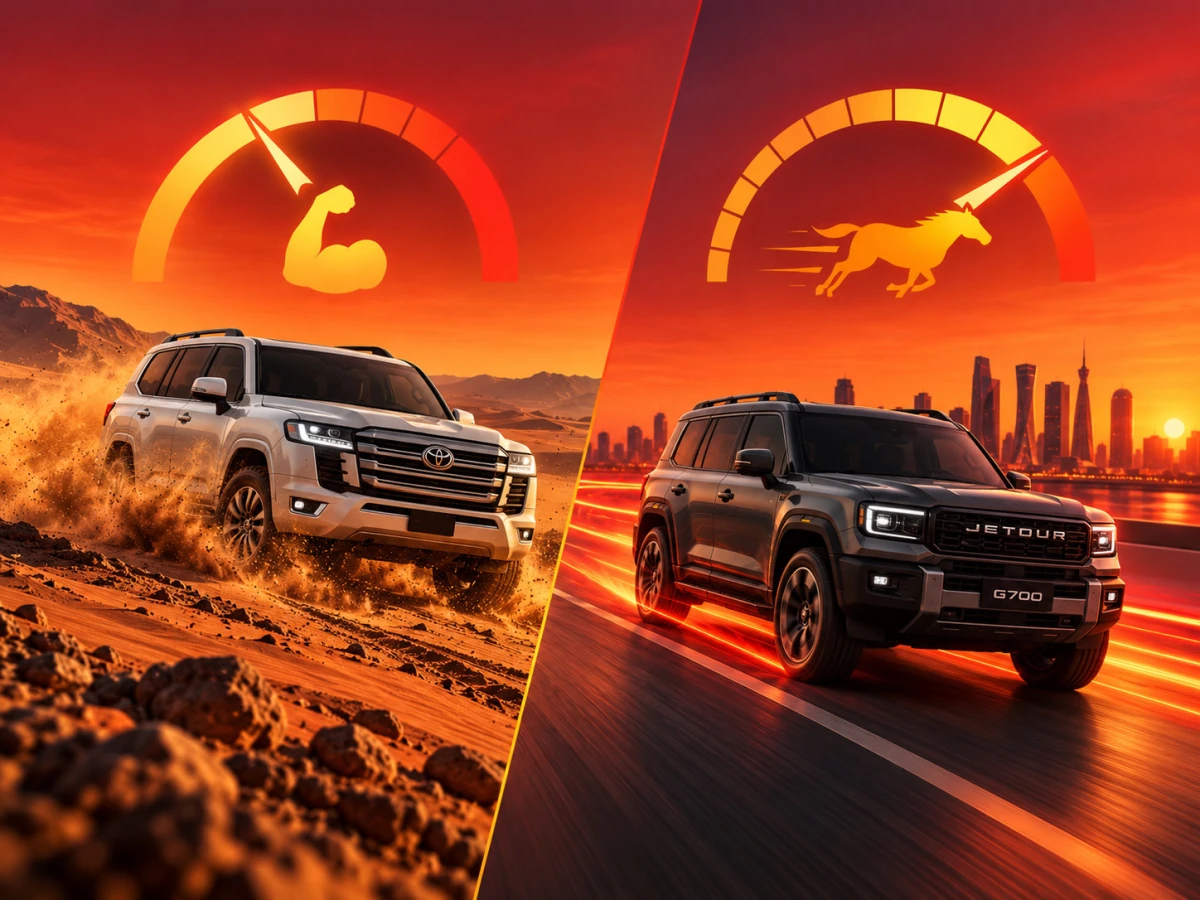
Toyota remains the undisputed king of Qatar's roads. Together with its luxury arm Lexus, the Japanese giant accounts for close to a third of all vehicles sold in the country. The Land Cruiser Wagon (LC 300) once again finished as the single best-selling model — a position it has held every year since at least 2011. That's not an accident. The LC 300 is practically a cultural institution in Qatar; it ticks every box that matters here: size, off-road capability, prestige, and long-term reliability.
But here's what's different about 2025: Toyota's share is shrinking, not because Toyota is selling fewer cars, but because others are selling a lot more.
Jetour's Rise Is Genuinely Remarkable
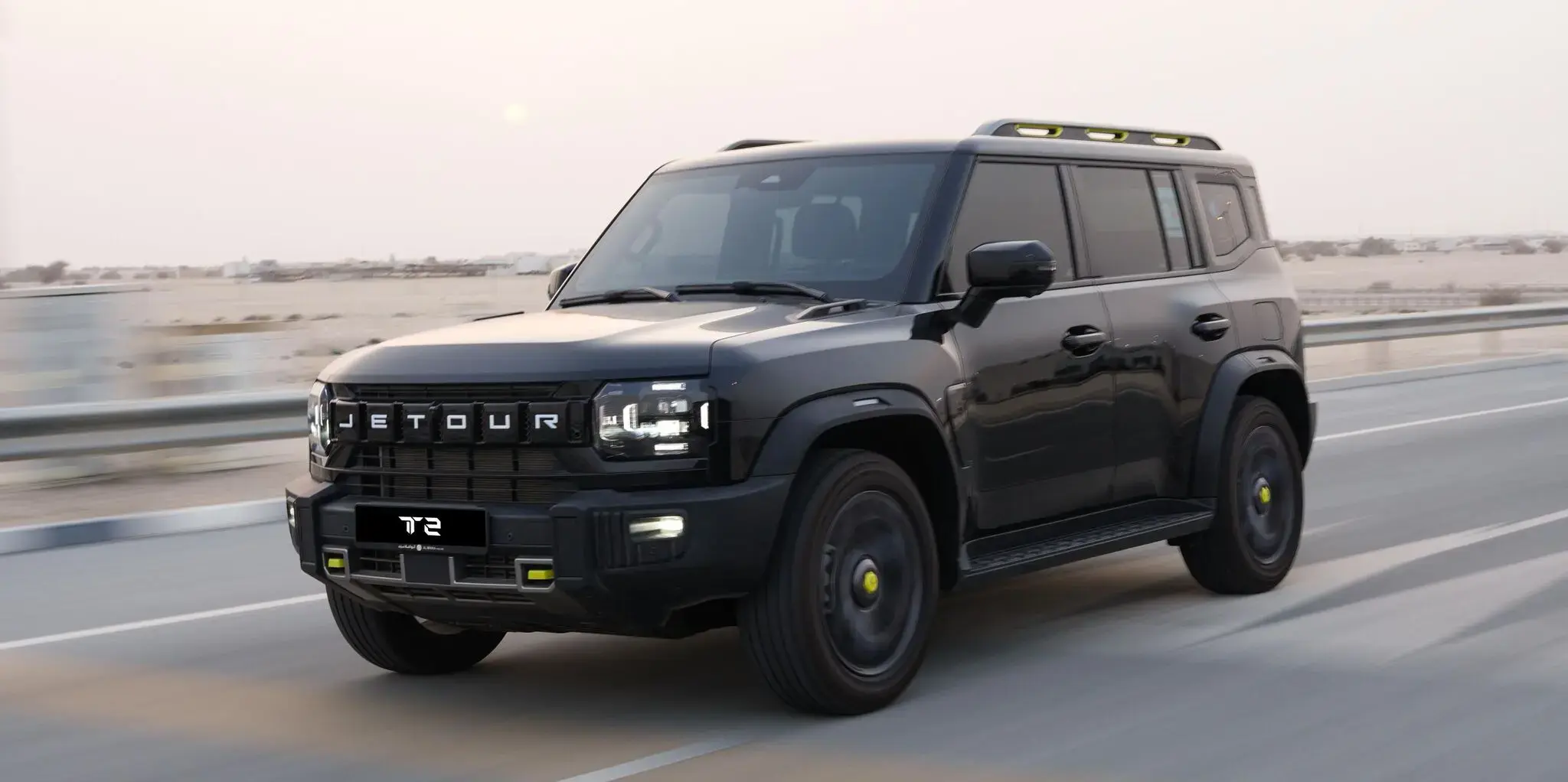
If there's one story that defines Qatar's car market right now, it's Jetour. The brand — part of Chery Group, one of China's largest automakers — barely registered on anyone's radar just a couple of years ago. Now it's the second-biggest brand in the country, and its T2 model finished as the second best-selling vehicle overall, right behind the Land Cruiser.
That's not a small achievement. The Jetour T2 beat out the Toyota Hilux, the Nissan Patrol, and every luxury nameplate on the market.
What made the T2 click with Qatari buyers? Spend five minutes with one and it becomes pretty clear. The cabin punches well above its price point — there's a 15.6-inch touchscreen, a Sony premium sound system, ventilated and massaging seats, and a panoramic sunroof that floods the interior with light. Off-road credentials are real too: buyers can choose a petrol version with proper 4WD, or step up to a hybrid variant with 456 hp and a 700mm wading depth. Add a six-year unlimited mileage warranty, and you start to understand why buyers are taking it seriously.
Pricing starts from around QAR 146,000 — a figure that would struggle to get you close to a well-specced Japanese rival.
Jetour's brand-wide growth across the GCC has been extraordinary. Across the Middle East, the brand recorded over 70,000 sales in 2025, representing more than 80% year-on-year growth. In Qatar specifically, it climbed well over 100% year-on-year — making it one of the fastest-growing car brands anywhere in the world, not just the region.
The Tank 500: China Comes for the Land Cruiser's Crown
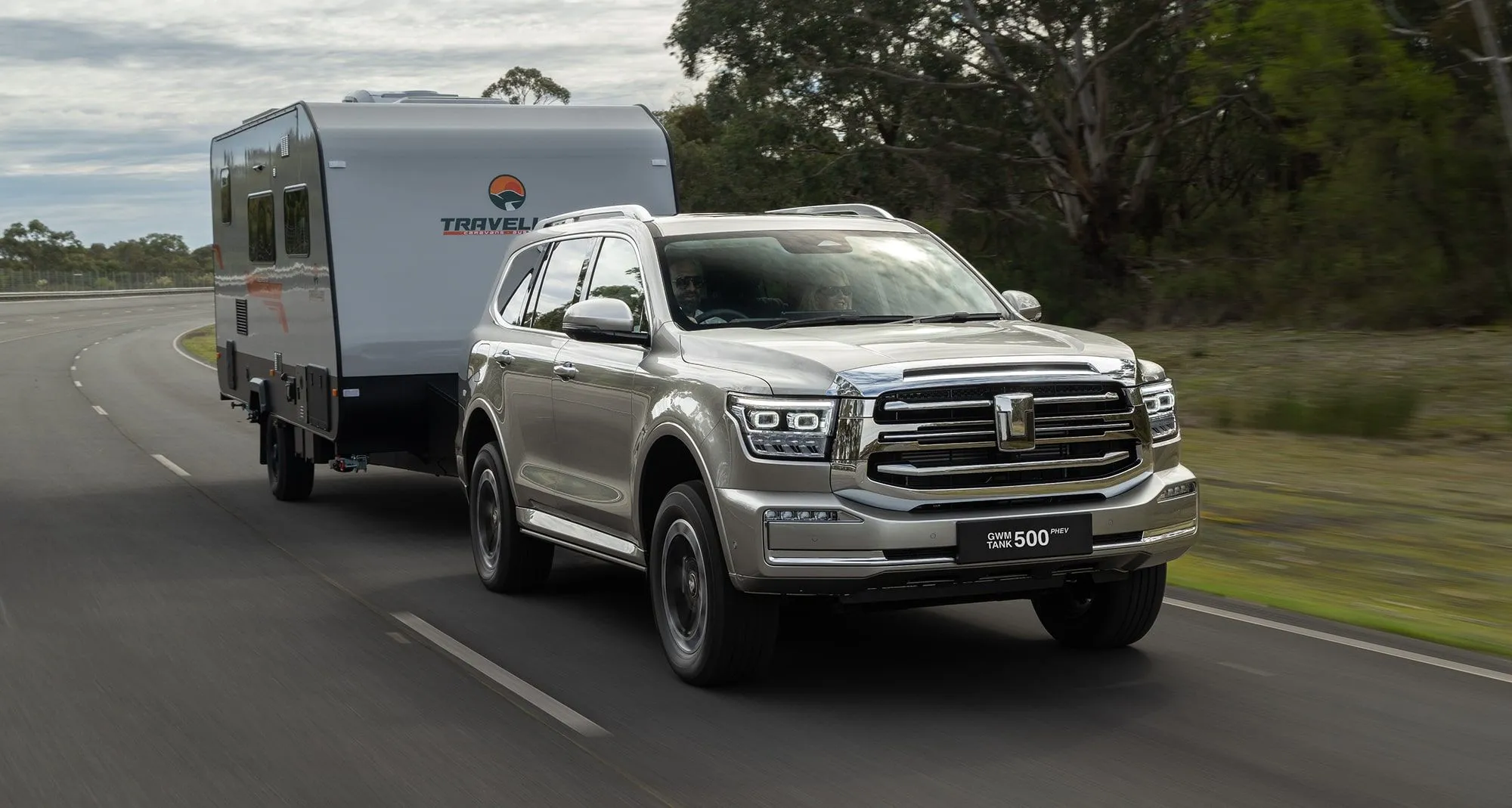
If Jetour's success was the headline, Great Wall Motors' Tank brand was the undercard story worth watching. The Tank 500 — a large, body-on-frame SUV with a twin-turbo 3.0-litre V6 and triple locking differentials — arrived in Qatar looking squarely at the Land Cruiser and Nissan Patrol buyer.
On paper, it's an ambitious target. In practice? The Tank 500 is making real progress. It cracked the top 10 models in Qatar by mid-2025, a remarkable feat for a brand that had virtually no presence here before.
The value proposition is hard to argue with. The Tank 500 is a full-size, body-on-frame SUV with serious off-road hardware — locking diffs, high ground clearance, multiple drive modes — wrapped in a cabin that feels genuinely premium. Massaging seats, ambient lighting, a large infotainment display, and soft-touch materials throughout. All of this at roughly half the price of a comparably equipped Land Cruiser.
The design plays a role too. The Tank 500 doesn't look like it's trying to be anything other than a proper, imposing SUV. The upright stance, muscular fenders, and large front grille give it a presence on the road that buyers here respond to. It looks the part — and it backs it up mechanically.
A New Competitive Reality
Qatar's car buyers are pragmatic. They've always gravitated toward vehicles that combine size, capability, and long-term dependability — which is exactly why Toyota has dominated here for so long. What's changing is that Chinese brands are now genuinely delivering on those same criteria, while adding more technology and undercutting on price.
This isn't a passing trend. Jetour, Tank, Haval, and Geely are building dealership networks, offering competitive warranty packages, and investing in after-sales support across the GCC. They're not here for a quick win — they're building for the long term.
Toyota isn't going anywhere. The Land Cruiser will likely finish 2026 on top as well. But the margin is tightening, the competition is real, and Qatari buyers are clearly open to new names on the badge — as long as the car delivers.
With 88,000+ units sold and the market still well below its 2014 peak of 97,501 units, there's room left to grow. The next few years should be very interesting.
Recent Articles
Most Viewed
Advice


Related Articles

-thumb_webp.webp)