Login / Register


News & Reviews
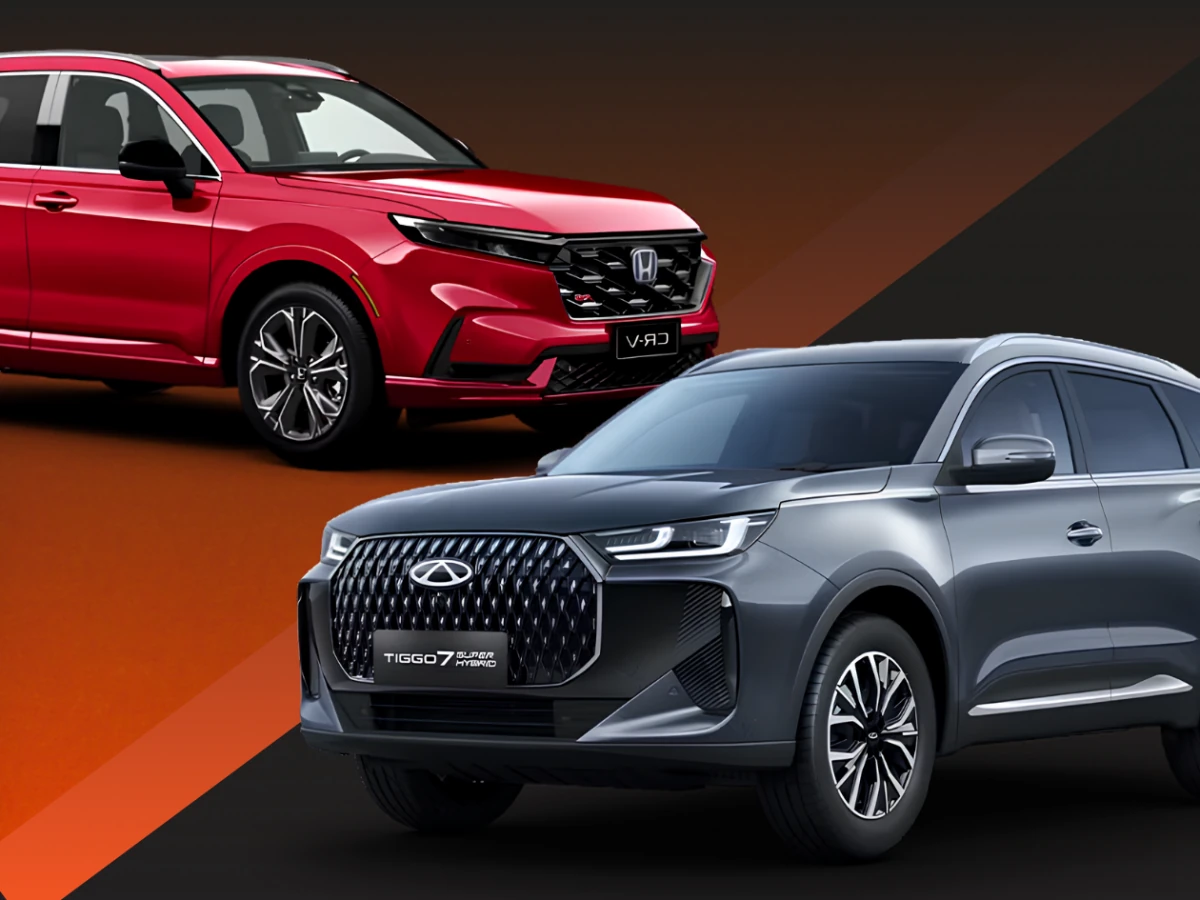
Chery Tiggo 7 Super Hybrid vs Honda CR-V e:HEV RS
23 Apr 2026
Hybrid SUVs are no longer just about fuel savings. They now sit at the center of what most buyers want: efficiency, comfort, and everyday usability in one package. That’s what makes this comparison particularly relevant. The Chery Tiggo 7 Super Hybrid enters the segment with a strong focus on electrification and value, while the Honda CR-V e
RS continues to build on a long-standing reputation for refinement and consistency.
The difference between them isn’t just technical—it reflects two distinct philosophies in how a modern SUV should feel and function.
Power and efficiency
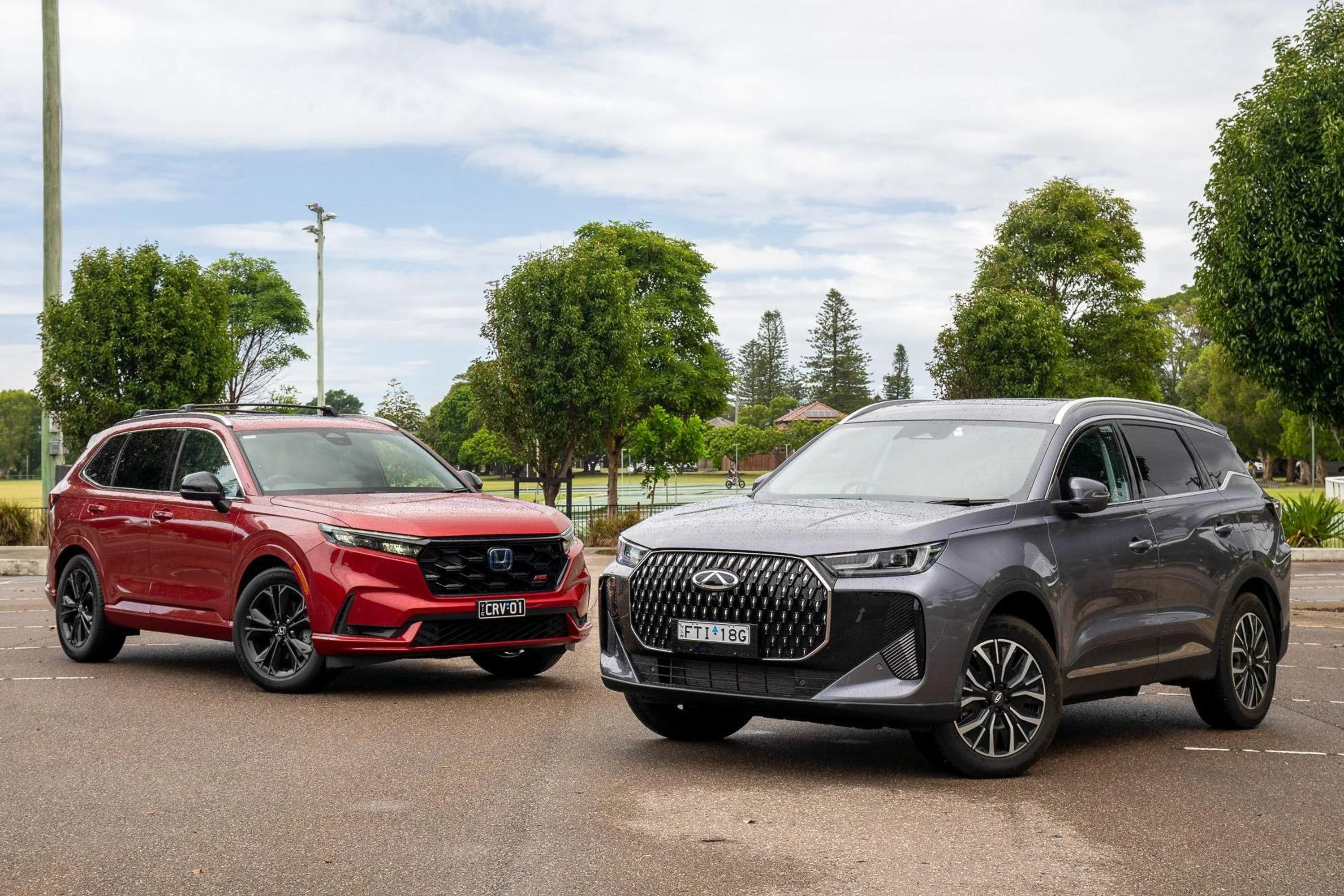
The Tiggo 7 Super Hybrid adopts a plug-in hybrid setup, combining a turbocharged engine with a relatively large battery. This allows it to operate in full electric mode for daily commuting distances, reducing fuel consumption significantly when charging is part of the routine. In urban environments, it can remain quiet and smooth for extended periods without engaging the engine.
The CR-V e:HEV RS uses a conventional hybrid system that doesn’t require external charging. Instead, it continuously manages power between the petrol engine and electric motor. The result is a more seamless experience where efficiency is maintained without any change in user behavior.
The contrast here is straightforward: one prioritizes maximum efficiency through electrification, the other emphasizes consistency and simplicity in real-world use.
On the road
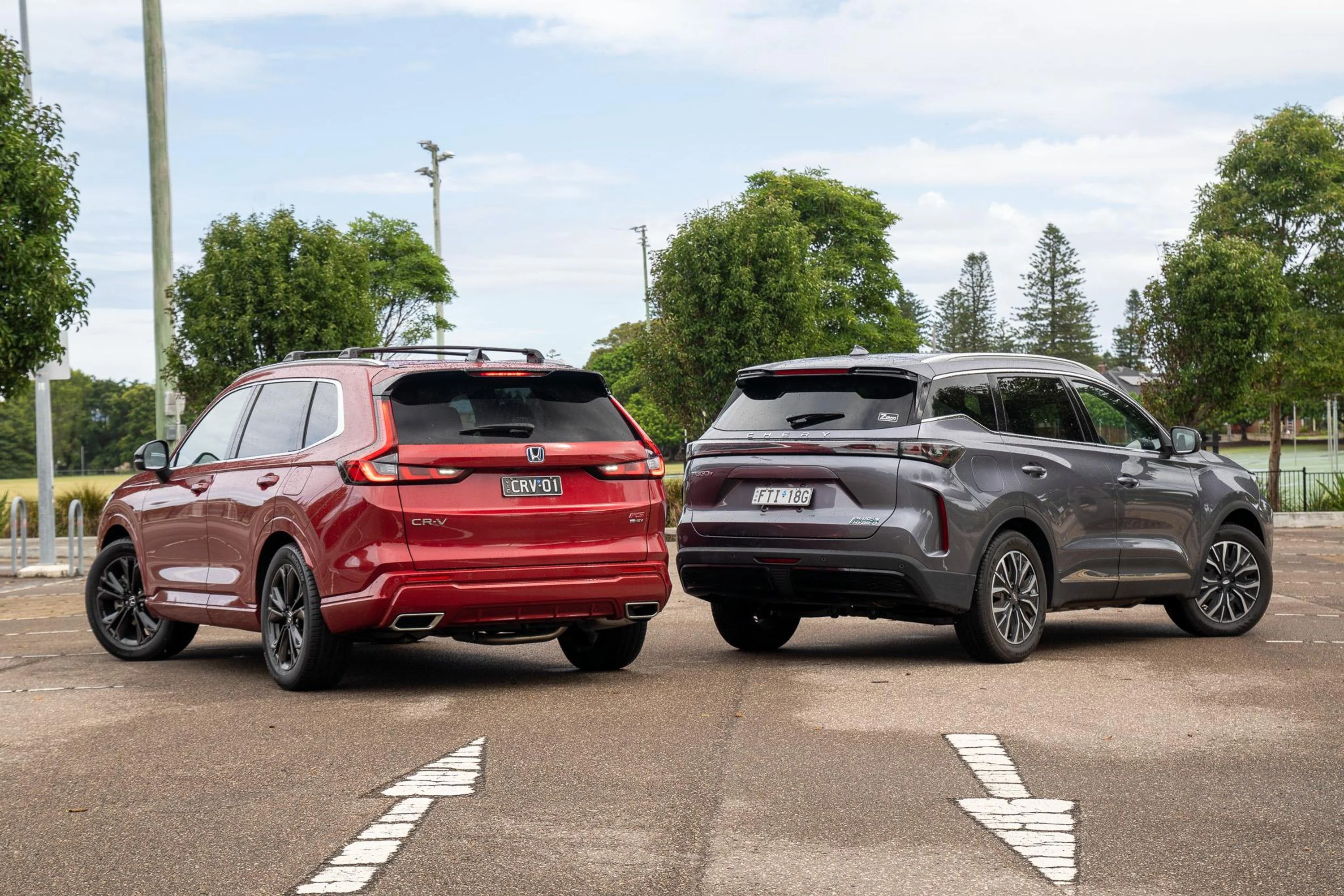
Driving character is where the separation becomes more noticeable. The CR-V feels composed and well-calibrated, with steering that has natural weight and a suspension setup that absorbs imperfections without losing control. The cabin remains quiet, and transitions between power sources are barely noticeable.
The Tiggo 7 focuses more on comfort than precision. Its steering is lighter, and the suspension is tuned to prioritize softness over feedback. While it remains comfortable for daily driving, it doesn’t deliver the same level of cohesion or confidence when pushed further.
The distinction lies in refinement versus ease, rather than outright capability.
Interior and technology
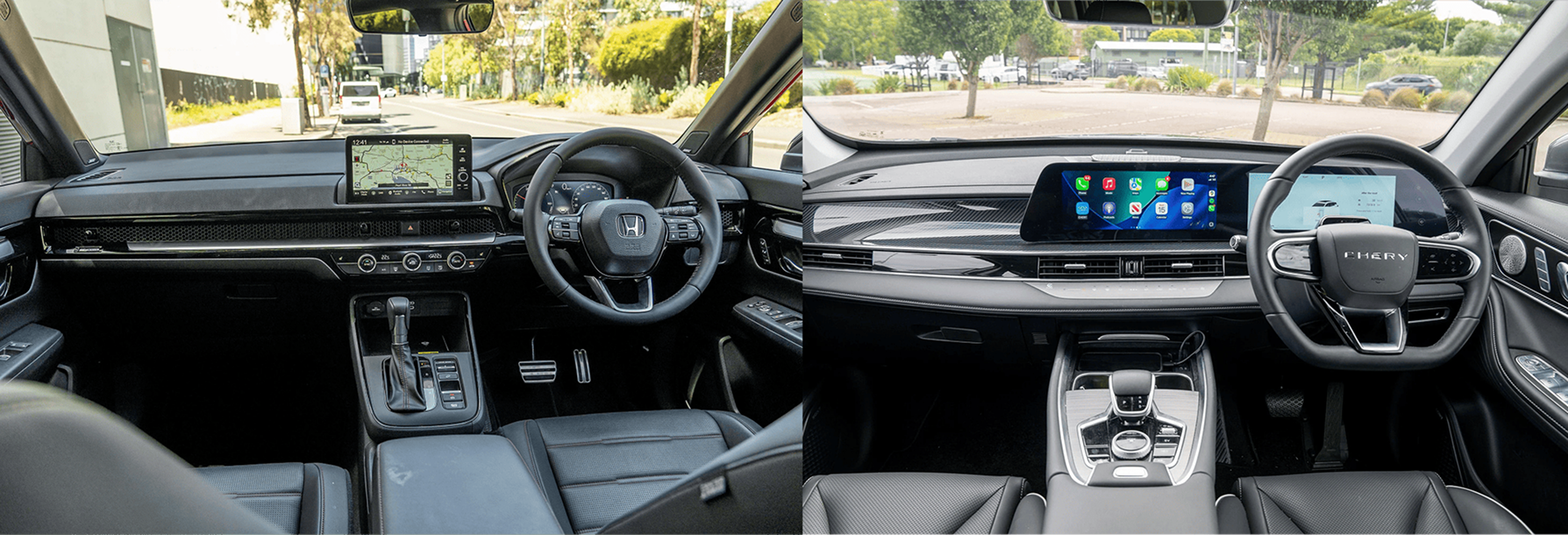
Inside, the Tiggo 7 presents a more modern and visually striking layout. Large digital displays and a feature-heavy setup give it a strong first impression, especially for buyers who prioritize technology and presentation.
The CR-V takes a more restrained approach. Its cabin design is simpler, but execution is more consistent. Materials feel more durable, and the interface is easier to use over time. Instead of emphasizing visual impact, it focuses on clarity and functionality.
Both approaches achieve a premium feel, but through different priorities—one through features and design, the other through usability and finish.
Space and everyday use
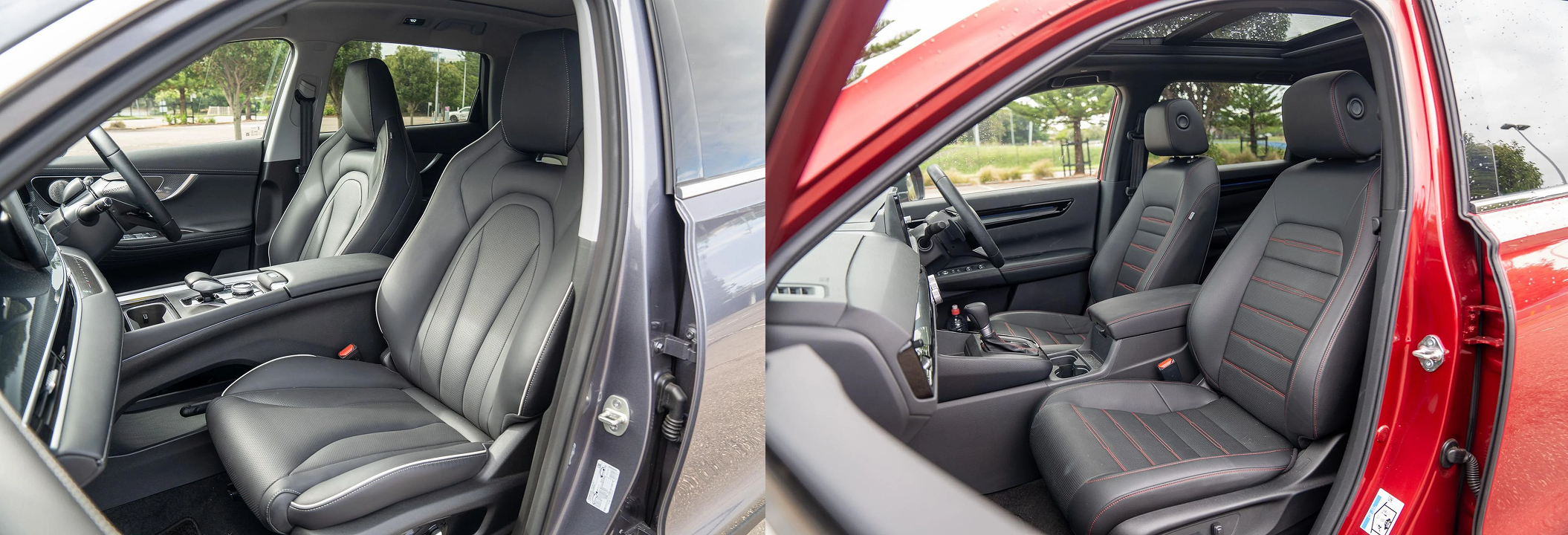
The CR-V benefits from a larger footprint, which translates into more generous rear seating space and a more accommodating cargo area. It is better suited to situations where passenger comfort and luggage capacity are constant priorities.
The Tiggo 7 uses its dimensions efficiently. A flatter rear floor improves usability for passengers in the second row, even if overall space is slightly more limited. It remains practical, but with a different emphasis on layout rather than size.
Safety and driver assistance
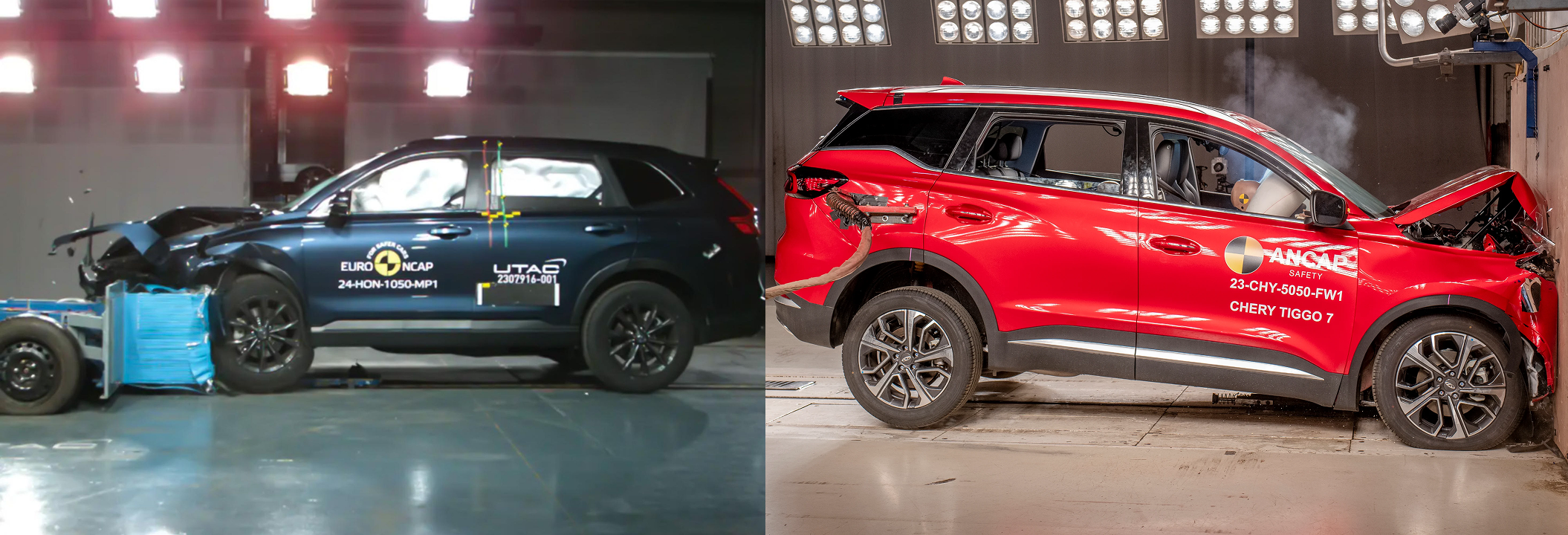
Both vehicles are equipped with a full suite of modern safety systems, including adaptive cruise control, lane-keeping assistance, and emergency braking. The difference is not in availability, but in calibration.
In the CR-V, these systems operate smoothly and predictably, integrating into the driving experience without drawing attention. In the Tiggo 7, they are present and functional, but can feel more sensitive in their responses, particularly in lane guidance and driver alerts.
This creates a distinction between systems that feel seamlessly integrated and those that are more noticeable in operation.
Final perspective
When you look at both side by side, you’ll quickly notice that each one delivers a distinctly different experience. If you’re drawn to modern tech, electric driving, and getting the most out of efficiency, the Chery Tiggo 7 Super Hybrid will likely stand out to you. If your focus is on overall comfort, smoothness, and a well-balanced drive that feels consistent every time you’re behind the wheel, the Honda CR-V e:HEV RS makes that immediately clear.
Rather than pointing to a single winner, this comparison puts two different approaches in front of you—the decision ultimately comes down to what fits your daily driving needs better.
Recent Articles
Most Viewed


Advice


Related Articles
-thumb_webp.webp)

-thumb_webp.webp)