
 Login / Register


News & Reviews
Should You Buy a Kia or a Ferrari? You Might Be Surprised by the Answer
27 Jul 2025
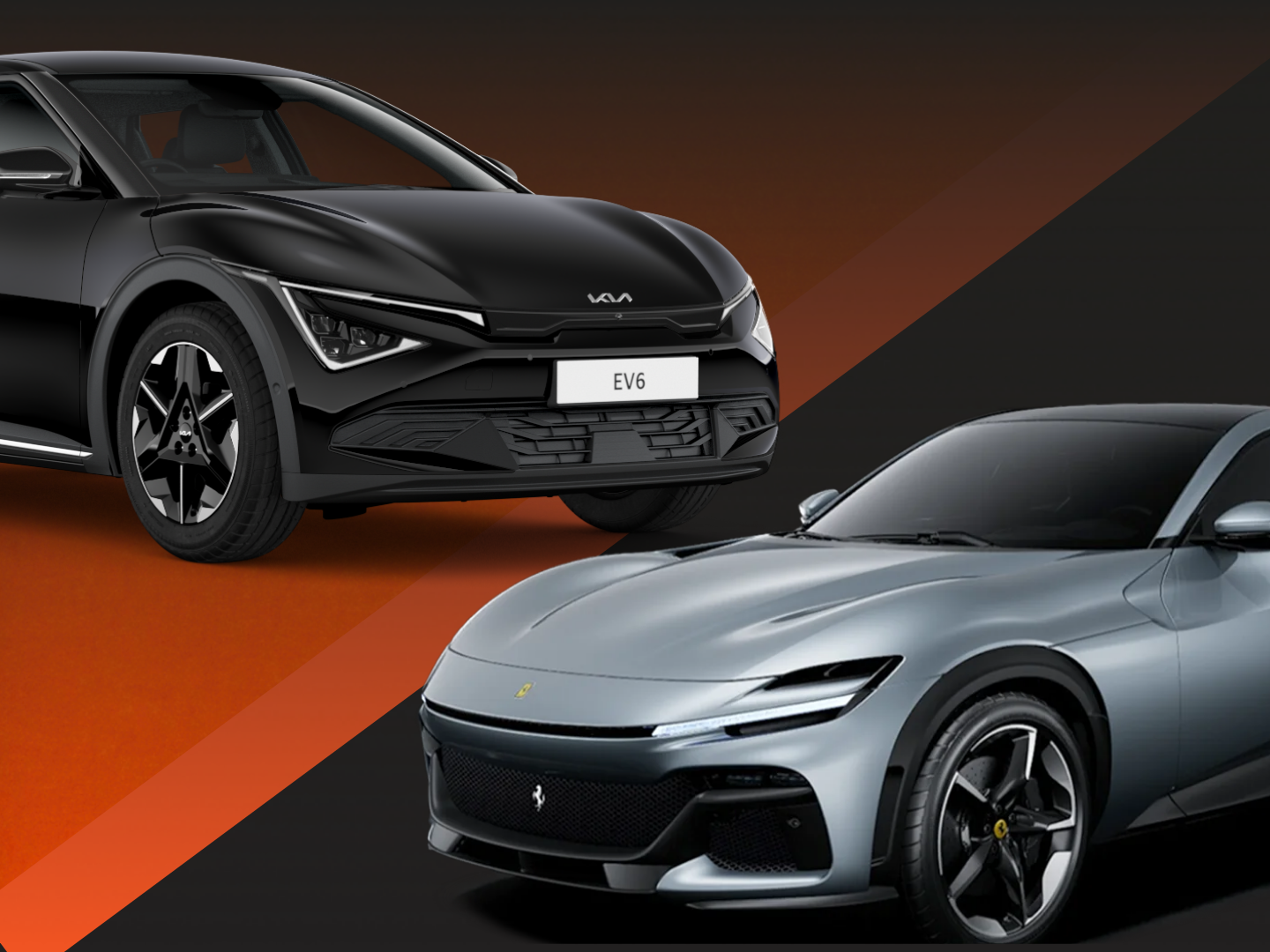
When it comes to performance cars, few would ever think to compare a Kia with a Ferrari. After all, one is a value-oriented Korean brand and the other a legendary Italian marque synonymous with supercars. But a recent drag race by Carwow threw a curveball: a humble Kia EV6 GT went head-to-head with a Ferrari Purosangue (Ferrari’s new V12-powered SUV) – and the results might shock you. In a straight-line sprint, the $65,000 Kia managed to beat the $400,000 Ferrari more often than not. How is this possible, and what does it mean for car enthusiasts? Let's break down the details of each car, explore why electric power can deliver jaw-dropping acceleration, and why raw speed isn’t the only factor when choosing between a Kia and a Ferrari
About the Kia EV6 GT
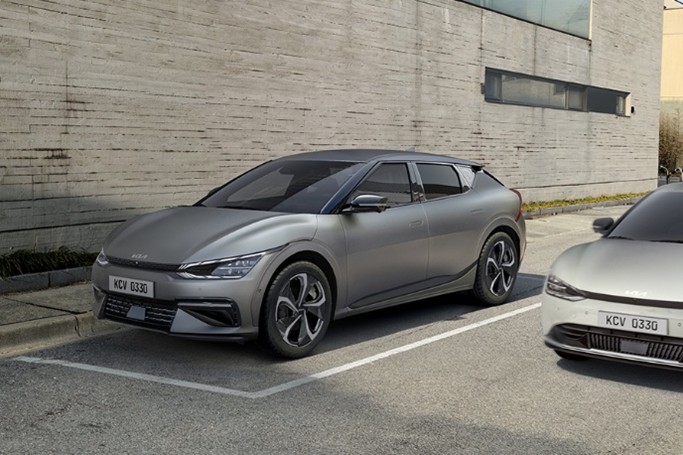
The Kia EV6 GT is a high–performance electric crossover that challenges traditional performance hierarchies. As Kia’s most powerful production car to date, it features dual electric motorsone on each axledelivering up to 585 PS (577 hp) under normal conditions and up to 640 hp in overboost launch mode. Torque peaks at 770 Nm, enabling 0–100 km/h sprints in just 3.4–3.5 seconds. These numbers place it squarely in supercar territory.
Despite its 2.2–ton weight, due to a 77.4 kWh battery pack, the EV6 GT’s instantaneous torque and all–wheel drive traction give it a decisive edge in straight–line performance. In repeated Carwow drag races, the EV6 GT consistently completed the quarter–mile in 11.4 secondsbeating the Ferrari Purosangue’s 11.5–second run in most attempts.
Kia’s engineers equipped the GT with more than just brute power. The car features electronically controlled adaptive suspension, an electronic limited–slip differential, and high–performance Michelin Pilot Sport 4S tires. While not designed for continuous track use, these upgrades provide a confident and dynamic experience on curvy roads and fast highway stretches. Regenerative braking is standard, but during repeated launches, the system is susceptible to heat build–up, and stopping performance fades compared to sports cars with carbon–ceramic systems.
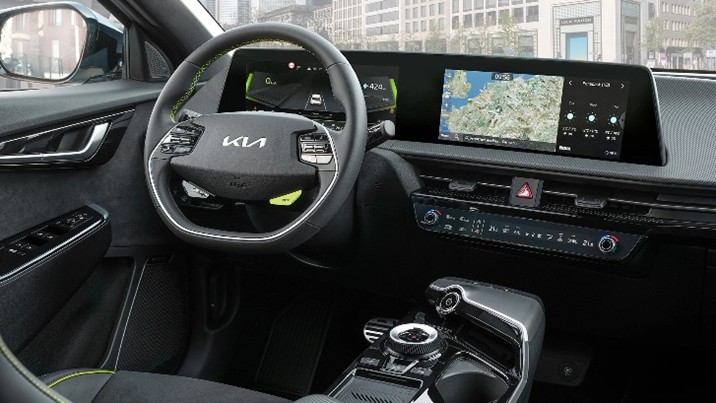
From a usability standpoint, the EV6 GT is practical. It offers 520 L of boot space (expandable to 1,300 L), five seats, and a tech–heavy interior that includes dual panoramic displays, augmented reality head–up display, and multiple USB–C charging ports. It retains modern comforts like ventilated seats, dual–zone climate control, and Kia’s suite of ADAS safety systems.
For hot climates like Qatar, the EV6 GT includes thermal management features such as an advanced battery cooling circuit and a heat pump system. These systems help sustain battery performance and passenger comfort even when ambient temperatures exceed 45°C. While aggressive desert off–roading is not its forte, the EV6 GT handles compacted sand and desert roads reliably.
Charging is handled via an 800V architecture, which allows for ultra–fast DC chargingadding up to 100 km of range in under five minutes, and a 10% to 80% top–up in around 18 minutes at a 350 kW station. As of the 2025 refresh, the EV6 GT supports Tesla’s NACS charging connector, granting access to broader fast–charging networks in regions adopting the standard.
Its price starts at around £60,000 (~QAR 240,000 or ~$65,000 USD), making it an extraordinary value when compared to traditional performance benchmarks.
About the Ferrari Purosangue
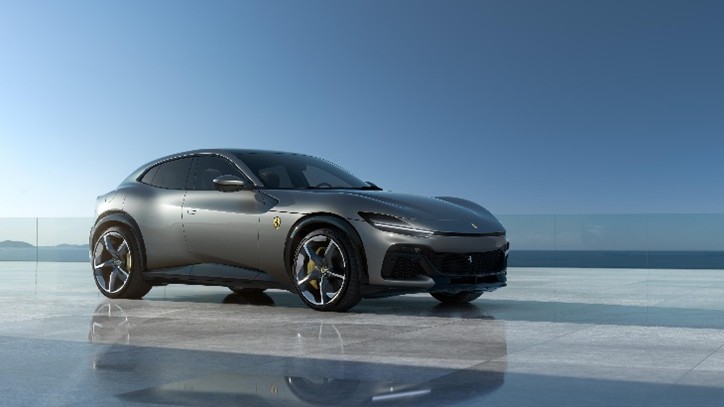
The Ferrari Purosangue represents Maranello’s bold entry into the high–performance SUV category. It is Ferrari’s first four–door production vehicle and features a 6.5–liter naturally aspirated V12 engineshared with the Ferrari 812 Superfast. The engine produces 725 PS (715 hp) and 716 Nm of torque, allowing for a 0–100 km/h time of 3.3 seconds and a top speed of 310 km/h.
Despite its SUV form and 2,150–2,200 kg weight, the Purosangue’s performance is enabled by advanced engineering. The drivetrain features two transmissions: an 8–speed dual–clutch transmission at the rear and a 2–speed gearbox on the front axle, which powers the front wheels only below 95 mph. This design reduces drivetrain mass and friction while optimizing acceleration traction.
The Purosangue's suspension system is among the most advanced in any production SUV. Co–developed with Multimatic, it uses electric motors at each damper to actively control pitch, roll, and yaw in real–time. Combined with rear–wheel steering and near 50/50 weight distribution, the system allows the Purosangue to handle with agility that belies its size.
Brake performance is superb thanks to standard carbon–ceramic discs. In brake tests from 100 mph, it consistently outperforms the EV6 GT, particularly during repeated stops where heat buildup is a factor.
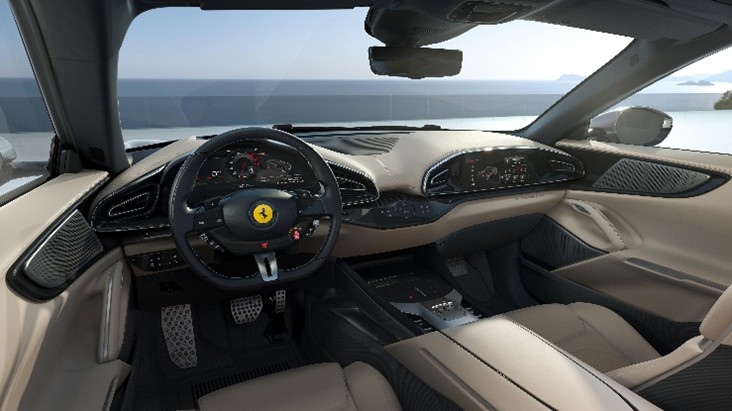
Inside, the Purosangue features a luxurious and driver–centric interior. It has four individual bucket seats, high–grade leather and Alcantara materials, and rear–hinged coach–style doors that improve access to the second row. A panoramic electrochromic roof is available as an option. Cargo capacity is 470 Lless than the Kia, but acceptable for a GT vehicle.
Although not intended for serious off–roading, the Purosangue performs well on desert highways and compact gravel thanks to its AWD system and responsive chassis. In the Qatari context, it serves more as a grand touring vehicle for high–speed, long–distance driving than a utility vehicle.
The Purosangue starts at around $400,000 (~QAR 1.45 million), with most examples selling for significantly more once customized. It is a low–volume production model, and exclusivity drives both its desirability and resale value.
Why Electric Power Delivers Exceptional Acceleration
EVs like the Kia EV6 GT outperform internal combustion vehicles in sprint races due to fundamental differences in how they deliver power:
–Electric motors provide maximum torque from 0 RPM. In the EV6 GT’s case, that’s up to 770 Nm instantly. By contrast, the Ferrari’s V12 reaches peak torque at 6,250 RPM.
–EVs often use a single–speed gearbox. The Ferrari’s 8–speed dual–clutch transmission is quick, but the milliseconds lost during gear changes allow EVs to maintain a lead.
–The Kia’s dual–motor AWD system adjusts power at each wheel with millisecond precision. This prevents slip and ensures near–perfect launches. Ferrari’s system, while advanced, must manage power from a combustion engine that is less responsive off the line.
–Battery placement along the floor lowers the EV’s center of gravity, improving stability and reducing weight transfer during hard launches.
These factors allowed the EV6 GT to consistently win the first 100 meters of any drag race against the Ferrari, though the Purosangue would begin catching up and sometimes overtake in rolling races or extended sprints.
It’s Not Just About the Quarter–Mile
While sprint times are compelling, both vehicles serve very different purposes.
–The Purosangue is built for endurance. Whether carving mountain roads or cruising at high speeds on long stretches like the Al Majd Highway, it offers predictable, repeatable performance. The EV6 GT is exhilarating but can’t match Ferrari’s composure over time.
–Ferrari’s carbon–ceramic brakes resist fade and stop the vehicle quicker under stress. The EV6 GT’s regenerative and friction braking system performs well initially but shows strain in repeated emergency stops.
–Both cars feature systems that help them cope with high temperatures. The Ferrari uses race–bred cooling for its V12, while Kia relies on heat pump tech and battery management. Neither car is suited for deep sand driving like a Toyota Land Cruiser, but both can handle desert roads and extreme heat without issue.
–The EV6 GT has more seating and cargo flexibility. Its tech–laden interior is user–friendly, while the Ferrari’s cabin is more luxurious but less spacious. The Kia is also easier to drive daily and park in tight Doha streets or crowded Souq Waqif.
–The Kia is significantly cheaper to buy and maintain. Electricity is less expensive than premium fuel, and Kia’s maintenance and warranty plans are more accessible. The Ferrari, while engineered to last, demands higher service costs and insurance premiums.
Real–World Ownership: Living with Each Car
In daily use, the EV6 GT is whisper–quiet and smooth through traffic, with enough range to comfortably cover trips from Doha to Al Khor and back with AC on full blast. The Ferrari, while more emotional to drive, can feel wide in narrow city lanes and rides firmer even in its softest setting.
Qatar Verdict: What Works Here
– For the city and coastal drives: Kia EV6 GT – responsive, spacious, AC–efficient, and easy to charge.
– For weekend getaways or VIP arrivals: Ferrari Purosangue – unmatched road presence, thrilling long–distance touring, and elite badge appeal.
TL;DR – Which One is For You?
| Feature | Kia EV6 GT | Ferrari Purosangue |
| Power | 640 hp (launch mode) | 715 hp (NA V12) |
| 0–100 km/h | 3.5 sec | 3.3 sec |
| Weight | ~2,200 kg | ~2,150–2,200 kg |
| AWD System | Dual motor EV | Front + rear transaxle |
| Charging Time (10–80%) | ~18 mins | N/A (petrol) |
| Base Price | ~QAR 240,000 | ~QAR 1.45 million |
| Range / Tank | ~425 km | ~500–550 km (est.) |
| Heat Resistance | Excellent (heat pump) | Excellent (track-tested) |
Final Thoughts
The Kia EV6 GT redefines value in the high–performance space. It offers supercar–like acceleration, usable range, and everyday comfort for a fraction of the price. It performs well in Qatar’s climate, and its charging infrastructure is growing thanks to NACS compatibility. For buyers who prioritize technology, practicality, and performance–per–riyal, the EV6 GT is an impressive choice.
The Ferrari Purosangue, however, remains the more complete and emotionally engaging machine. It combines exotic materials, race–derived engineering, and iconic V12 sound into a vehicle that defies the SUV category. While it’s less practical, it’s unmatched in prestige and long–distance performance.
Ultimately, the choice comes down to priorities. The Kia democratizes speed and modern tech; the Ferrari delivers passion, precision, and presence. In either case, performance has never been more excitingor more diverse.
Recent Articles
Most Viewed

Advice

