
 Login / Register


News & Reviews
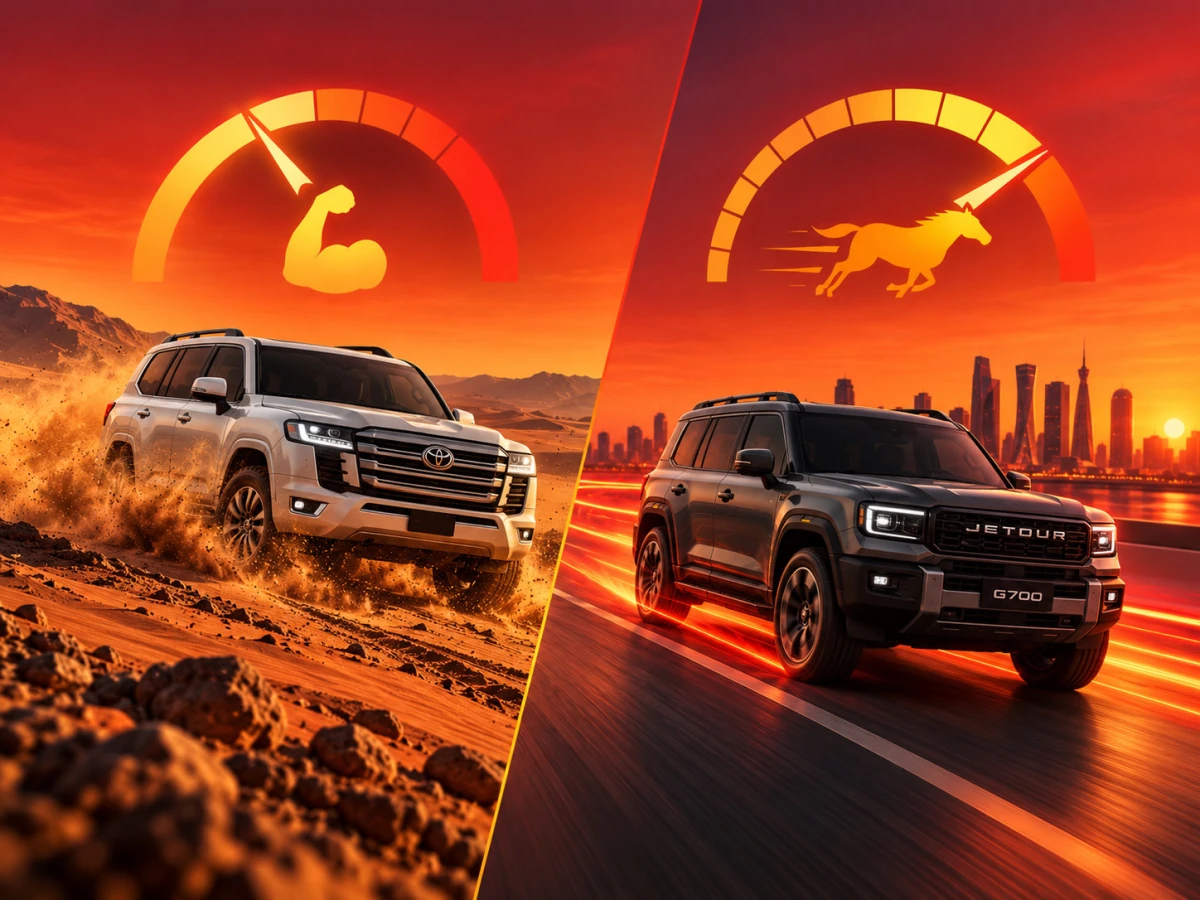
What Many Drivers Don’t Know: The Difference Between Torque and Horsepower
14 Oct 2026
When talking about car performance, we often hear figures like 200 horsepower or 400 Nm of torque. But have you ever wondered what these numbers actually mean? And does a car with more horsepower necessarily mean it's more powerful or faster?
The truth is that many drivers confuse horsepower with torque, even though each plays a different role in a vehicle's performance.
In this article, QMotor explains the difference in simple terms to help you better understand your car and choose the right vehicle for your needs.
1. What Is Torque?
Torque is the rotational force produced by an engine, measured in Newton-meters (Nm).
To understand it, imagine trying to open a heavy door. The harder you push, and the farther away from the hinges you apply that force, the easier the door opens. This is similar to how torque works in an engine.
In cars, torque contributes to the pulling force delivered to the wheels and is particularly important for:
-
Accelerating from a standstill.
-
Accelerating at low speeds.
-
Climbing steep hills.
-
Towing trailers and carrying heavy loads.
-
Driving off-road and across sandy terrain.
This is why many diesel vehicles and SUVs produce high torque figures, even when their horsepower ratings are relatively modest.
2. What Is Horsepower?
Horsepower is a unit that measures how quickly an engine can perform work.
In simpler terms, while torque represents rotational force, horsepower represents how quickly an engine can deliver power using that torque.
Horsepower becomes particularly important when it comes to:
-
Acceleration at medium and high speeds.
-
Maintaining strong acceleration as speed increases.
-
Achieving higher top speeds, depending on aerodynamics, gearing, and other factors.
-
Delivering sporty, high-performance driving experiences.
This explains why sports cars often feature high horsepower figures, especially at higher engine speeds.
3. A Simple Example: Torque vs. Horsepower
Imagine comparing two cars:
Car A:
-
Horsepower: 200 HP
-
Torque: 450 Nm
Car B:
-
Horsepower: 300 HP
-
Torque: 350 Nm
Car A may offer stronger pulling performance at lower engine speeds, depending on its gearing and operating conditions.
Car B, however, may deliver stronger acceleration at higher speeds thanks to its greater horsepower.
But these numbers alone don't tell the whole story.
A vehicle's weight, transmission, torque curve, tire grip, and drivetrain all influence its actual performance.
In other words, more torque doesn't automatically mean faster acceleration, and more horsepower doesn't always guarantee a quicker car.
4. Why Do Diesel Engines Usually Produce More Torque?
Diesel engines are known for generating substantial torque at relatively low RPM (revolutions per minute).
This makes them particularly suitable for trucks, SUVs, commercial vehicles, and heavy-duty applications.
Gasoline engines, on the other hand, can typically operate at higher RPM, allowing many of them to generate greater horsepower.
However, modern technologies such as turbocharging, hybrid powertrains, and electric motors have significantly changed the traditional relationship between torque and horsepower.
For example, electric vehicles can deliver strong torque almost instantly, providing impressive acceleration from a standstill.
5. Which Matters More When Buying a Car in Qatar?
The answer depends on how you intend to use your vehicle.
For desert adventures and off-road driving:
Strong low-end torque is particularly valuable when navigating sand dunes and challenging terrain. However, four-wheel-drive capability, gearing, tires, and vehicle weight are equally important.
For sports car enthusiasts:
High horsepower is an important factor, especially for acceleration at higher speeds. However, the vehicle's weight, handling, and ability to transfer power to the road also play major roles.
For everyday driving around Doha:
A balanced combination of torque, horsepower, fuel efficiency, and comfort is generally more useful than simply choosing the car with the highest numbers.
For towing boats or trailers:
Torque is important, but you should also check the manufacturer's approved towing capacity to ensure the vehicle can safely handle the load.
6. So, Which Is More Important: Torque or Horsepower?
The difference can be summarized in one simple sentence:
Torque measures rotational force, while horsepower measures how quickly work can be performed.
More importantly, the two are directly connected. Horsepower is calculated using torque and engine speed.
That's why, when comparing two vehicles, you shouldn't focus only on horsepower or assume that the car with the highest torque figure will always be faster.
A car's overall performance depends on how efficiently it delivers power to the wheels, its weight, transmission, and several other engineering factors.
Final Thoughts
The next time you see a car advertised with 300 horsepower or 500 Nm of torque, you'll know that these figures tell two different parts of the same story.
The best car isn't necessarily the one with the biggest numbers. It's the one that delivers the right performance for your driving style and needs.
Stay tuned to QMotor for more automotive insights, expert tips, and practical advice to help you make smarter decisions when buying your next car.
Recent Articles
Most Viewed

Advice

